SEO in 2025: What Actually Works

How to Increase Organic Traffic in 2025 (What's Actually Working Now)
TL;DR:
SEO isn't dead. But the lazy version of it is.
You can't just copy what's ranking and expect results anymore. You content needs to provide real value to actually be worth finding.
That means:
- Understanding your audience better than your competitors do
- Doing keyword research that starts with real customer problems
- Creating content that genuinely helps people
- Using AI as a tool, not a crutch
So, if you decide to not read this article fully (although I surely hope you will), the main take-away is that organic search is still very valuable, but the old "copy what's ranking" playbook doesn't work anymore. In this blog, I am going to show you what does.
And if your more of an audio/visual learner, feel free to watch the video, which offers similar insights to this blog post.
Let's get into it!
My Background
Over the past three years, I've built a web development and SEO business from scratch, helping contractors, therapists, real estate agents, hair stylists, and dozens of other small businesses boost organic traffic and get found on Google. I've dialed in a method that works really well for the businesses that I work with, and some months, this work generates upwards of $10,000.
I started my agency back in 2023, right as AI tools exploded onto the scene and Google started making major algorithm changes. Right as every marketing guru declared "SEO is dead" for the hundredth time.
And because of that timing, I never had old habits to unlearn. I had to figure out how to increase organic traffic using what actually works now; not what worked in 2018.
In this blog I will tell you all the ways I have found to increase organic search traffic for small business websites. Here's what I've learned.
Why Organic Traffic Still Matters
Before I get into tactics, let's touch on some of the basics. What is organic search traffic, and why does it even matter?
Organic search traffic refers to visitors who find your website through unpaid search results; primarily Google, but also Bing, YouTube, and other search engines. Unlike paid ads, organic traffic doesn't stop when your budget runs out; it continues bringing customers to your website on an ongoing basis, at no extra cost to you or your business.
In that sense, when you learn how to increase website traffic organically, you're building an asset. A blog post or service page that ranks well organically can bring you leads for months, or in some cases, years without additional investment. If its a valuable piece of content, other blogs will link to it as well, further benefiting your website by establishing domain authority through the ever-precious backlink. And in my mind, that is the true power of organic traffic. It compounds over time at no additional expense to you or your business.
And contrary to what many online marketers in your youtube feed may tell you, Google search is still a powerhouse of the internet. While the tactics to rank may have changed, the opportunity is still massive with Google, as it still processes roughly 8.5 billion searches per day, which is roughly 100 times more than ChatGPT handles.
The Old SEO Playbook Is Dead
With that being said, there are some things that have changed to be aware of. Getting pages to rank competitively 5 years ago was relatively simple, but unfortunately, level of effort needed in order to sustain long-term rankings has increased substantially.
Five years ago, pretty much all you had to do was find a keyword, look at what's ranking and copy the top result, but make it "better" by adding a few extra points. Sprinkle in some keywords. Get a few backlinks and voila; wait for traffic.
It was mechanical, simple, and it worked really well... until it didn't.
AI changed everything. Suddenly, anyone could mass-produce the kind of content that search engines favored at a scale never before seen, which resulted in lots of pages that all looked and sounded nearly identical. And you know what happens when Google is flooded with thousands of blogs, pages and other content that is virtually identical? It stops rewarding that kind of content.
According to Originality.ai's ongoing study, AI content now makes up nearly 17-19% of Google's search results, which has steadily climbed for the last 79 months, and shows no signs of stopping.
And as I previously mentioned, the risk here is that when everyone's doing the same thing, and writing the exact same AI generated content, Google stops rewarding it. Google's March 2024 core update was specifically targeted towards handling this type of low-quality and AI-generated spam.
One of the major complaints I hear from business I work with is that they followed all the SEO 'rules, best practices, that they hit every checkbox. And they're still stuck on page three.
The problem isn't that they did SEO wrong. It's that they did old SEO right.
The Mindset Shift: Write for People, Not Algorithms
The shift is simple to explain and hard to execute: stop writing for search engines and start writing for the person searching.
Here's what I mean.
Let's say you want to rank for "how to find a good therapist." The old approach would be: What keywords do I need? What subheadings should I include? How long should the content be?
While the new approach would be: Who is actually typing this into Google at 11pm? What are they really trying to figure out? Are they looking for insurance info? Red flags to avoid? How to even start the conversation?
You need to consider what is motivating the person to search for a given term, and then write content that satisfies their search intent. When you understand what someone actually needs, you create content that helps them. And content that helps people is content Google wants to rank. With every search, Google is trying to find the most relevant content to answer a given query, so the more closely you can match your content to the search intent, the more valuable your content will be, and the more likely it is to rank.
I know this may sound like fluffy advice, but it really isn't. It's the difference between content that sits there and content that brings in leads. And to be honest, as a business owner myself, it is a really valuable exercise to put yourself through. It's question that I think all business owners should wrestle with; who are your customers, and what do they expect you to provide them with?
You need to know exactly how to answer that question before making any meaningful progress in regard to your website's SEO. Once you can answer that question, then you can develop your offers in a such a way that they will satisfy the search intent of your customers, and have a better chance of being served to them by Google.
Effective Keyword Research Techniques for Organic Traffic
Now with all that being said, keyword research still does matter, so definitely don't write it off entirely! You need to know what people are actually searching for before you can help them find you.
Here's how I approach keyword research now:
Start With Your Customer's Problems, not Keywords
Don't even start with a keyword tool. Start with the questions your customers ask you everyday. What do they email you about? What do they ask on sales calls? Those questions are often the exact phrases people type into Google. No one knows your business like you do, so make sure to trust your experience.
Use Google's Free Data
Before you pay for any tool, use what Google gives you for free. This is data straight from Google, and is debatably some of the most valuable insight you can get:
Autocomplete: Start typing a phrase and see what Google suggests
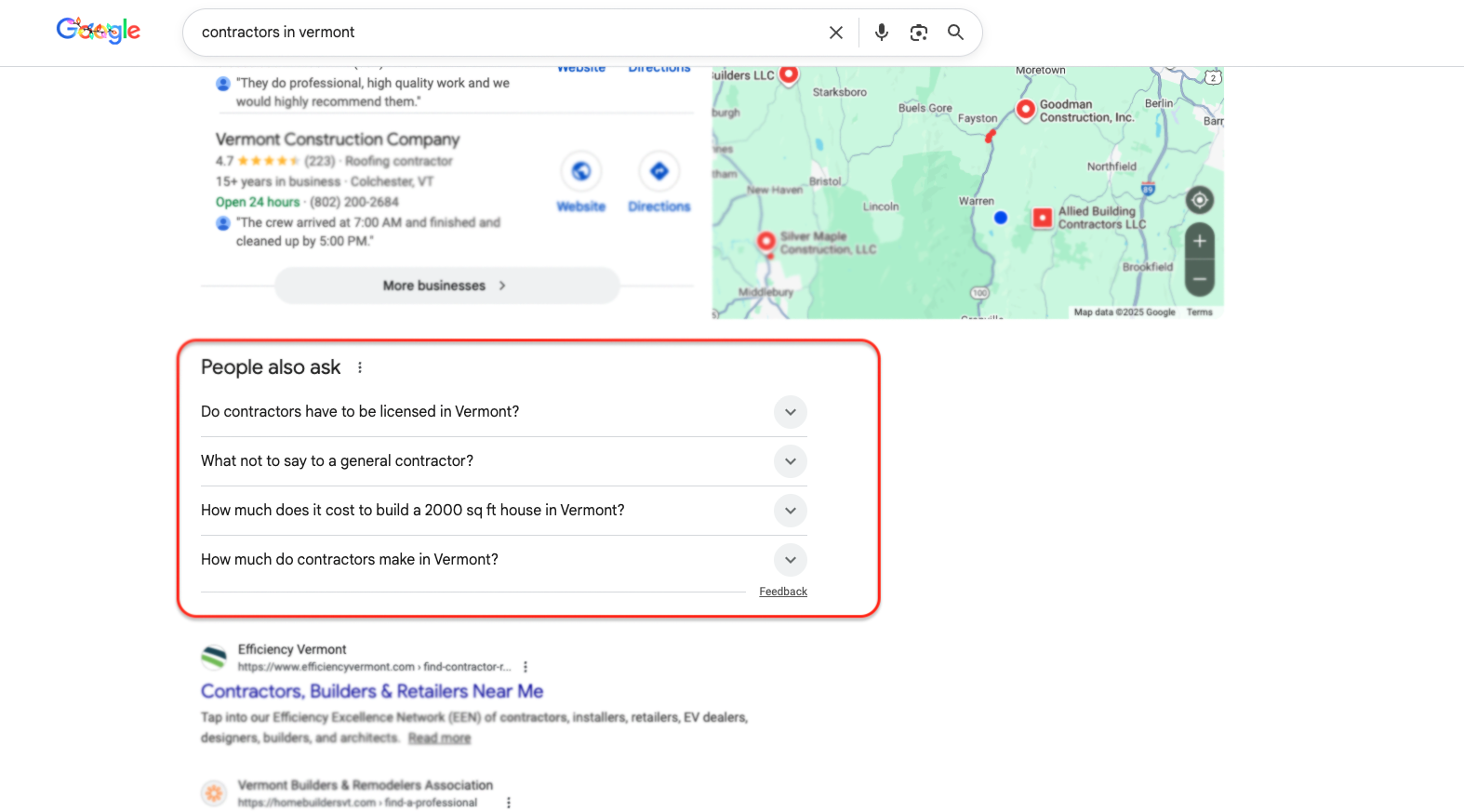
People Also Ask: The dropdown questions that appear in search results. These are 100% worth including in your content.
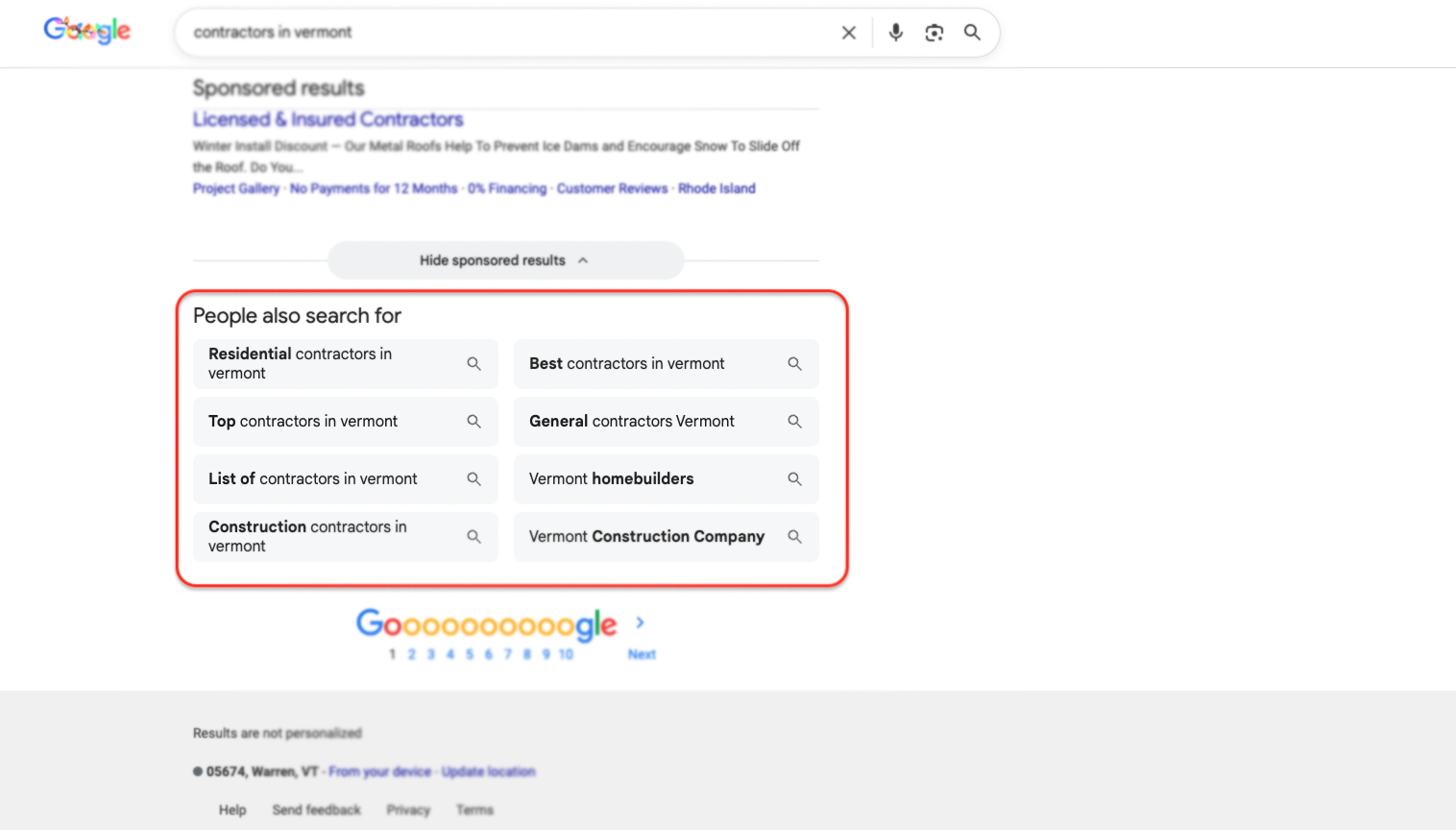
Related Searches: The suggestions at the bottom of the results page. These show you exactly what people are searching for in Google's own words; straight from the horses mouth.
Use Tools to Validate and Expand
Once you have a list of ideas, tools like SEMrush, Ahrefs, or Google Keyword Planner can help you see search volume, competition, and related keywords you might have missed. But the tools should validate your thinking, not replace it.
Creating Content That Actually Ranks
Keyword research gets you the target. Content is how you hit it.
But not just any content. Google has gotten much better at recognizing thin, generic content, especially now that AI can produce it at scale. To boost organic traffic, your content needs to stand out. It needs to have your experience and personality baked right into it.
Answer the Full Question
Don't just answer the surface-level query. Think about what someone would need to know next. If they're asking how to find a therapist, they probably also want to know what to expect in a first session, how to know if it's working, and how to handle insurance.
One comprehensive piece often outperforms five thin ones.
Add What Only You Can Add
AI can summarize what's already out there. It can't share your experience with clients, your perspective on what actually works, or the mistakes you've seen people make.
That firsthand insight is what makes content valuable — and it's what Google is increasingly looking for with their helpful content guidelines.
Use AI as a Tool, Not a Replacement
Here's where I see a lot of people go wrong.
The problem with AI-generated content isn't the AI — it's how people use it. They type in a keyword, hit generate, and publish whatever comes out. That's not a strategy. That's just adding to the noise.
Recent data shows that AI-generated content sites without human editing saw 40-60% traffic drops after Google's latest updates. But sites that mixed AI with genuine human expertise actually performed fine — some even gained.
Google isn't punishing AI content wholesale. They're punishing lazy content, regardless of how it's created.
I use AI constantly — for brainstorming angles, drafting outlines, analyzing what's ranking, speeding up research. The difference is that I'm guiding the AI based on what I know about SEO and what I've learned about the audience. The AI executes. I direct.
If you don't understand SEO fundamentals, AI will just help you create mediocre content faster. But if you know what good looks like, AI becomes a multiplier. That's the thinking behind our free contractor copy generator — it gives you a solid, SEO-aware first draft that you can then layer your own experience and voice on top of.
How to Increase Organic Traffic: The Bottom Line
SEO isn't dead. But the lazy version of it is.
You can't just copy what's ranking and expect results anymore. You need to actually be worth finding.
That means:
- Understanding your audience better than your competitors do
- Doing keyword research that starts with real customer problems
- Creating content that genuinely helps people
- Nailing the on-page fundamentals
- Building backlinks through valuable content
- Using AI as a tool, not a crutch
- Building skills that work across platforms
Organic traffic growth doesn't happen overnight. It takes consistent effort. But unlike paid ads, the results compound over time. A page that ranks well today can bring you traffic for years.
If you're a small business owner trying to figure this out, I get it — it's a lot. That's exactly why I do what I do.
[Book a free call] and let's talk about what's actually going to move the needle for your business.